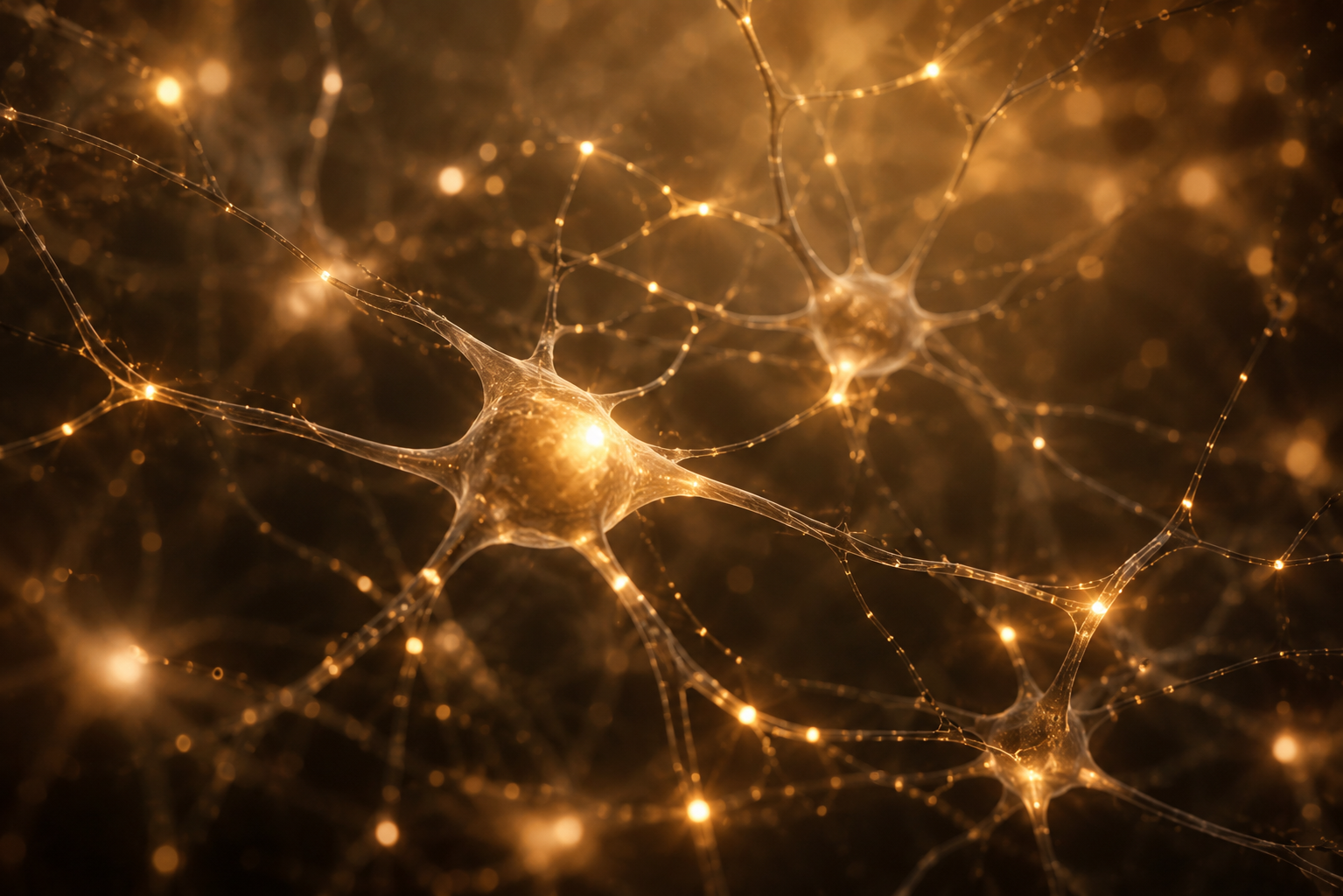
Think of your brain as a city
Every thought, mood, and memory you have travels along roads built from brain cells called neurons. Those roads are how your brain sends messages back and forth — the busier and better-maintained the roads, the easier it is for good information (like "you're safe," "you're loved," "this will pass") to get where it needs to go.
Depression and chronic stress wear down those roads
Prolonged depression, anxiety, PTSD, and chronic stress can act like potholes and traffic jams on those roads. Over time, some of the connections between neurons actually weaken or disappear. That's part of why depression can feel less like sadness and more like static — the signals that should reach you are getting stuck in traffic.
Ketamine helps rebuild the roads
Most antidepressants (like SSRIs) work by slowly adjusting one messenger chemical, serotonin, over weeks or months — like gradually re-timing a few traffic lights. Ketamine works differently. It triggers a quick burst of a chemical called glutamate, which your brain uses to grow brand-new connections between neurons, especially in the areas that regulate mood.
In simple terms: ketamine doesn't just ease symptoms in the moment. It gives your brain the raw materials to physically rebuild some of the roads that stress and depression wore down — which is part of why relief can show up in hours or days, not weeks.
Why this matters: if you've tried antidepressants that didn't work, it's not because something is wrong with you — it's because those medications and ketamine work through completely different systems in the brain. A different approach can mean a different result.